Environmental sampling
After the Smitty's Supply Facility fire in August 2025, EPA, DEQ and LDH carried out environmental sampling and analysis (EPA).
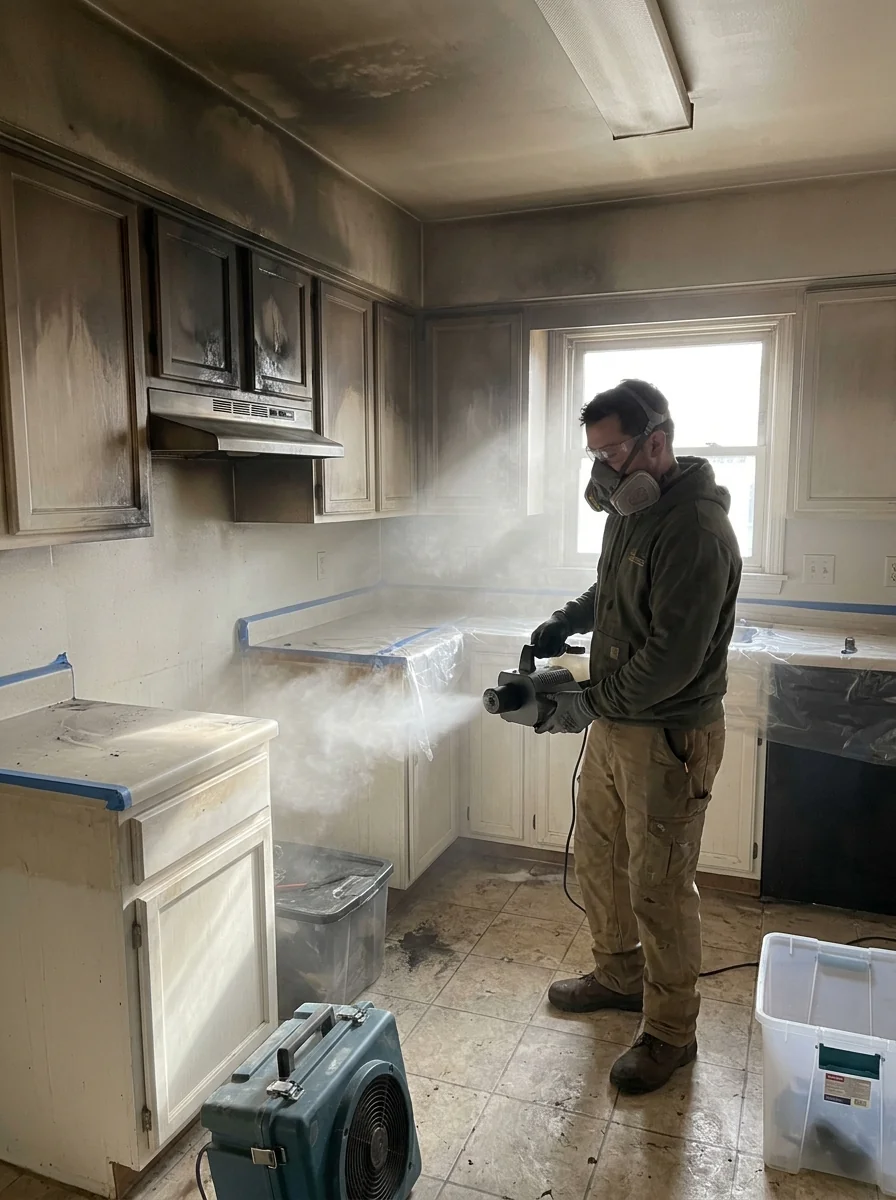
Fire damage restoration in Louisiana covers soot and smoke residue after a fire. Call (800) 764-5219 to describe the fire damage.
Fire damage restoration cleans soot and ash from a home after a fire, and removes the materials that cannot be cleaned (EPA).
Soot and ash should be wet-cleaned, because dry sweeping stirs them into the air (EPA).
Odor is treated at the source. Ozone and hydroxyl generators are avoided, because they add chemicals to the air (EPA).
Water and cleaning solutions drive soot deeper into a surface, so soot-covered heirlooms are not washed with water (FEMA).
Fire damage cleanup in Louisiana runs in five stages: protection, ventilation, wet cleaning, cleaning of hard surfaces and washable items, and ash disposal. Each stage starts only after the one before it is complete.
Gloves, long sleeves, long pants, shoes and an N95 respirator protect the skin and lungs from ash (EPA).
Open windows and doors if conditions allow, and use fans to exhaust contaminants outdoors (EPA).
Mist surfaces with water, then wet-mop. Use a HEPA vacuum, not a household or shop vacuum (EPA).
Hard surfaces and washable items such as clothing and bedding can usually be cleaned (EPA).
Ash is sealed in bags or containers before it goes in the trash (EPA).
Call (800) 764-5219 and describe the damage.
Act fast
Deposited soot is not ingested, and concentrated residue is not touched directly (EPA).
Ask whether environmental sampling was carried out after the fire (EPA).
Outside surfaces that soot or smoke reached are washed, and hands are washed after contact (EPA).
Photographs of the damage are taken before cleanup starts (LSU AgCenter).
After the Smitty's Supply Facility fire in August 2025, EPA, DEQ and LDH carried out environmental sampling and analysis (EPA).
Residents were advised to wash outside surfaces that soot or smoke may have reached, and to wash hands after contact (EPA, 2025).
Deposited soot should not be ingested, and areas of concentrated residue should not be touched directly (EPA, 2025).
No. Do not ingest deposited soot or touch areas of concentrated residue (EPA).
Yes. Wash outside surfaces that soot or smoke may have reached, and wash your hands after touching them (EPA).
Yes. After the Smitty's Supply Facility fire, environmental sampling and analysis were carried out with local, state and federal officials (EPA).
No. Water and cleaning solutions drive soot deeper into the surface (FEMA).
Yes. Wear an N95 respirator to avoid breathing in ash (EPA).
Yes, once it is sealed in bags or containers (EPA).