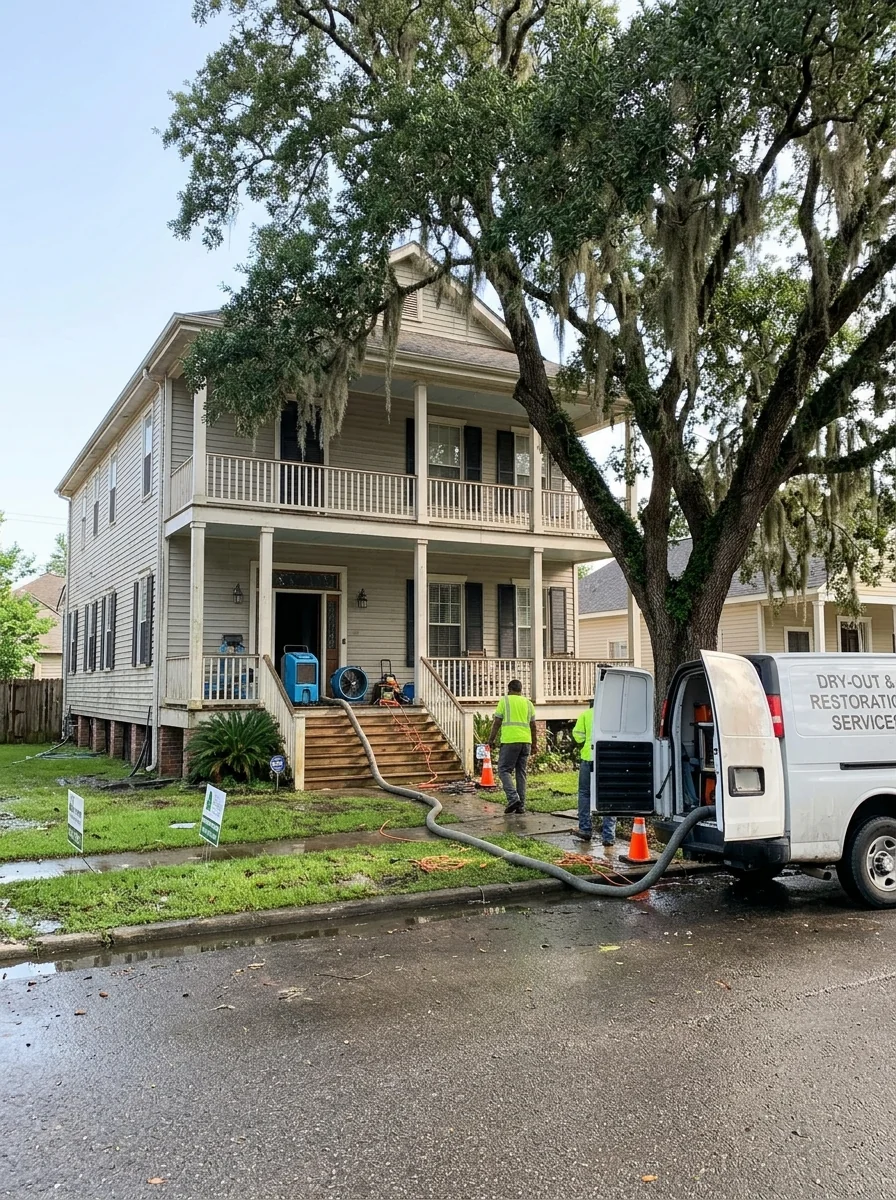
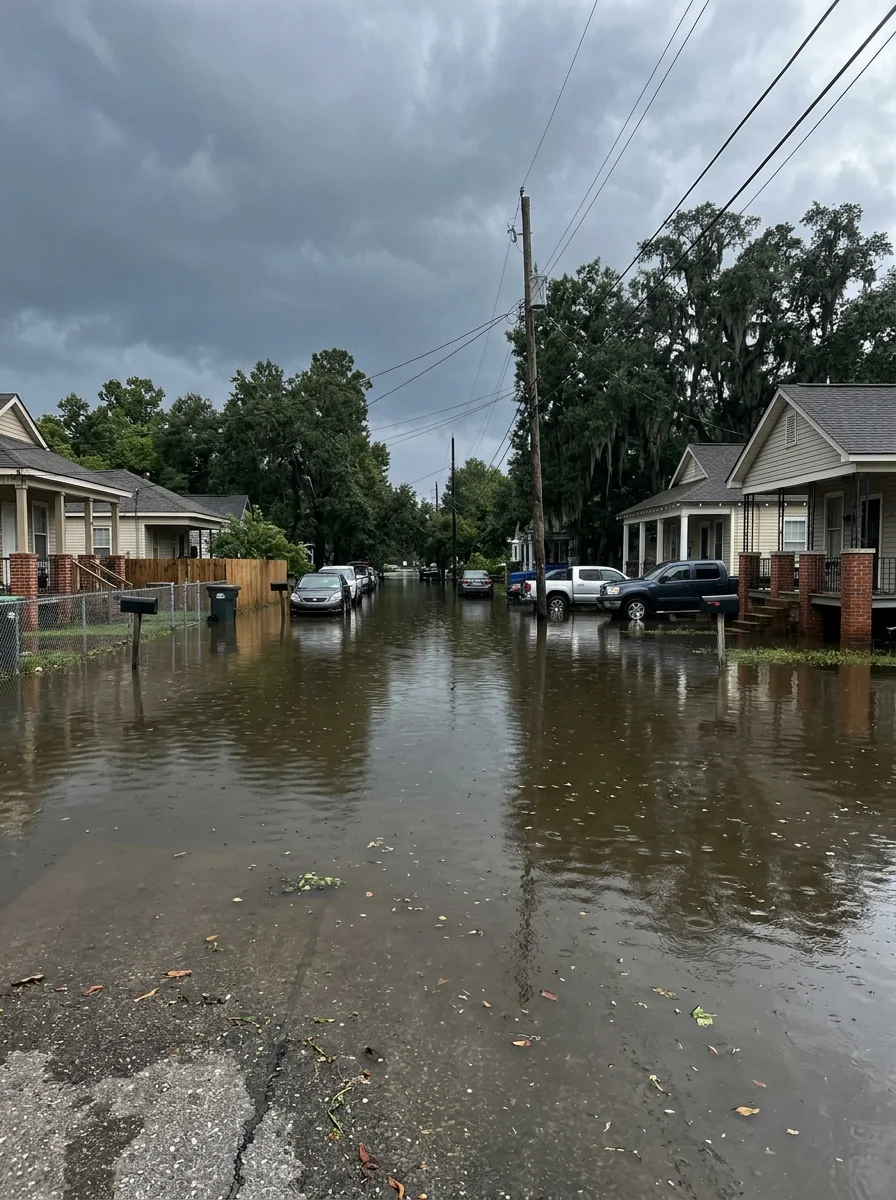
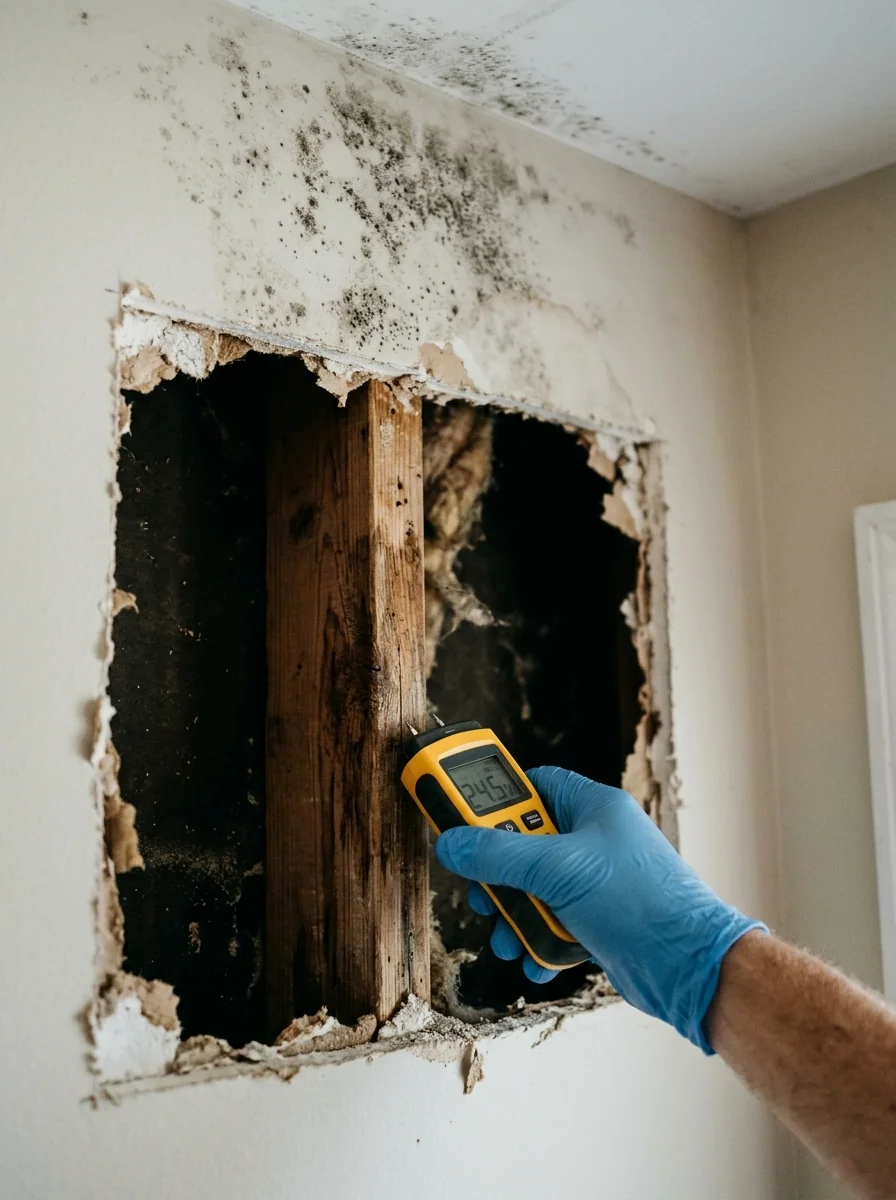
Hurricane Ida
Hurricane Ida cut through southeast Louisiana, leaving homes and businesses damaged and many without power (LSU AgCenter, 2021).
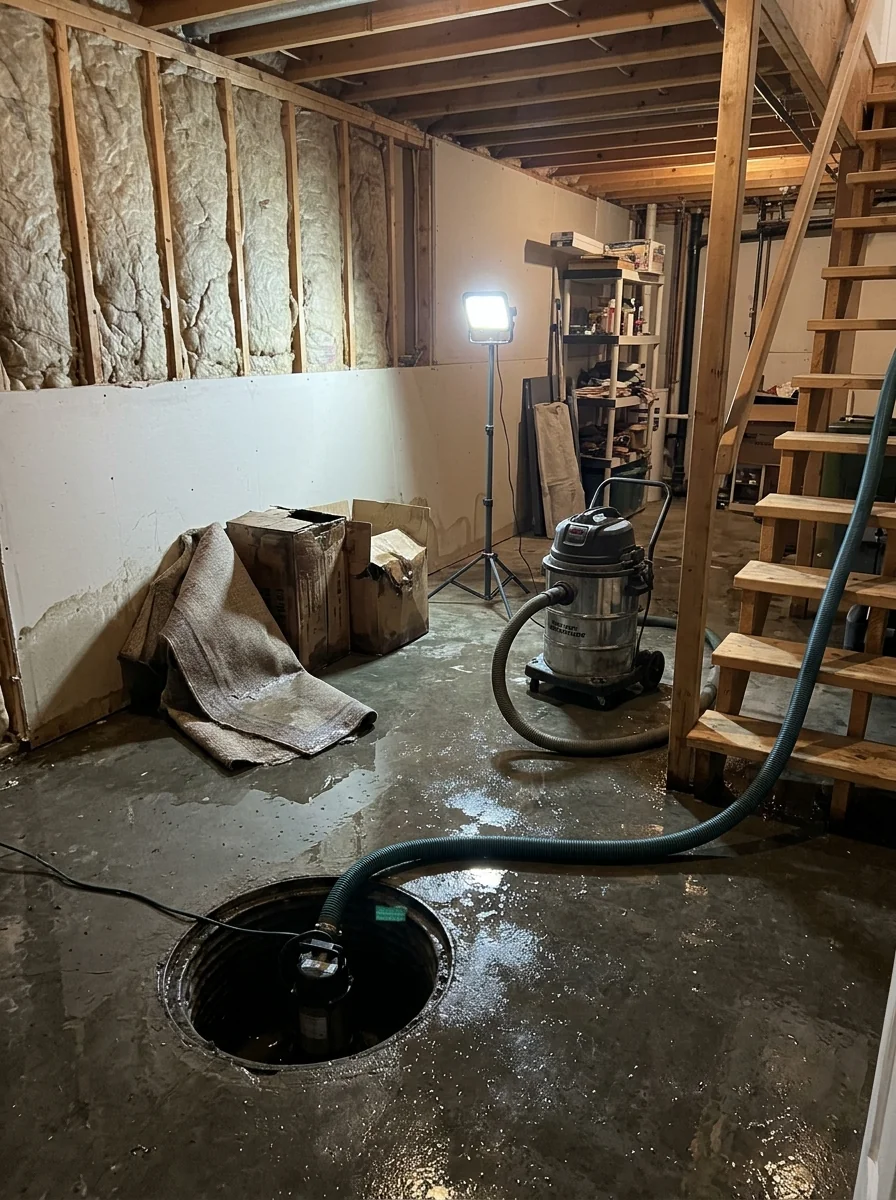
Basement flooding cleanup in Louisiana dries below-grade rooms and checks the structure before rebuilding. Call (800) 764-5219 to describe the flooding.
Basement flooding cleanup dries a below-grade room and its concrete slab, then checks the structure before rebuilding (LSU AgCenter).
Concrete slabs absorb water, so a slab can stay wet after the water is gone. Tape clear plastic to the slab for 24 hours; visible moisture underneath means the slab is still wet (LSU AgCenter).
Mold can start within two to three days after flooding (LSU AgCenter).
Check for cracks, sagging and foundation shifts before anyone works in the room (LSU AgCenter).
Basement flooding cleanup in Louisiana runs in six stages: the call, inspection, water removal, drying, a slab check and a wood check before rebuilding. Each stage starts only after the one before it is complete.
Call (800) 764-5219 and describe the water source, when it started and which rooms are below grade. You are connected with a team that covers your area.
The team checks the water source, the water category and moisture on the walls, floor and slab. Moisture readings show how far the water has spread (LSU AgCenter).
Standing water is pumped out, and wet carpet, pad and insulation are removed. Wet insulation is removed even when the wallboard looks dry (LSU AgCenter).
Dehumidifiers and air movers dry the room. Indoor relative humidity is kept below 50%, and 30% to 40% is better until everything is dry (LSU AgCenter).
The slab is covered with plastic and watched for 24 hours. Moisture under the plastic means the slab is still wet (LSU AgCenter).
Wood is inspected for decay and termite damage. Soft wood is repaired or replaced, and walls are closed only when moisture readings show the wood is dry (LSU AgCenter).
Call (800) 764-5219 and describe the damage.
Act fast
Timing varies by site. Take photos for insurance claims before anything is moved (LSU AgCenter).
The slab and wood checks matter because mold begins to grow on materials that stay wet longer than two or three days, according to LSU AgCenter.
The slab is covered with plastic and watched for 24 hours. Moisture under the plastic means the slab is still wet (LSU AgCenter).
Indoor relative humidity is kept below 50% during drying, and 30% to 40% is better until everything is dry (LSU AgCenter).
Wood is inspected for decay and termite damage, and soft wood is repaired or replaced before rebuilding (LSU AgCenter).
The Proof of Loss is filed with the insurance company within 60 days of the flood (Louisiana Department of Insurance).
Hurricane Ida cut through southeast Louisiana, leaving homes and businesses damaged and many without power (LSU AgCenter, 2021).
Home flood damage is not covered under homeowners' policies, but National Flood Insurance Program policies or a separate flood policy may cover it (Louisiana Department of Insurance).
Soft wood is repaired or replaced before rebuilding, because wood decay and termite damage must be inspected for (LSU AgCenter).
Watch the plastic covering the slab for 24 hours. Moisture that collects under it means the slab is still wet (LSU AgCenter).
Keep indoor relative humidity below 50%. Between 30% and 40% is better until everything is dry (LSU AgCenter).
No. Flood damage is not covered under homeowners' policies. It is covered under National Flood Insurance Program policies or a separate flood policy from a private or surplus-lines insurer (Louisiana Department of Insurance).
File your Proof of Loss with your insurance company within 60 days of the flood (Louisiana Department of Insurance).
Yes. Inspect the wood for decay and termite damage, and repair or replace soft wood before rebuilding (LSU AgCenter).
Yes. Mold can start within two to three days after flooding (LSU AgCenter).
No. Vinyl wallpaper keeps walls from drying inward, so it is avoided (LSU AgCenter).
Wait until wood moisture drops to about 15% before replacing insulation and wallboard, and do not close walls while wood is above 19% (LSU AgCenter).