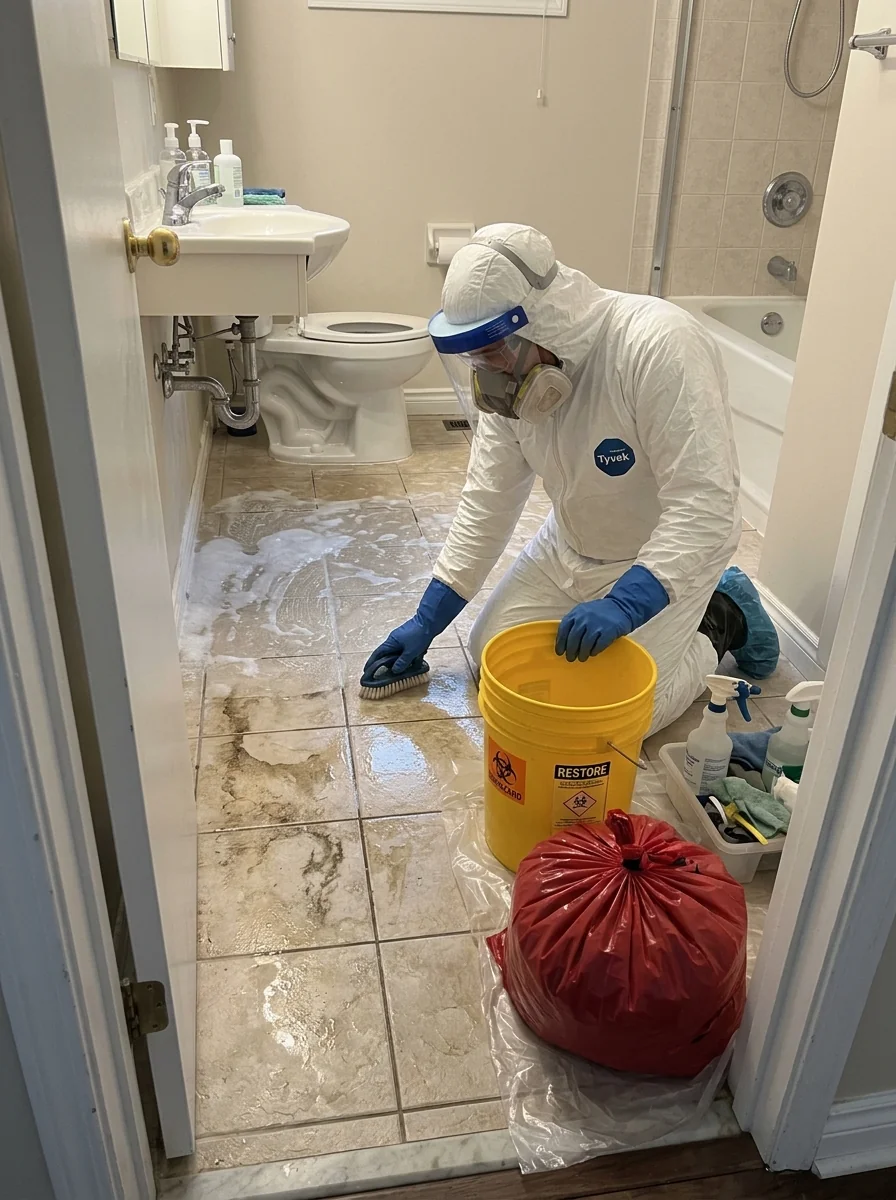
Emergency Flood Damage Cleanup

Emergency Flood Damage Cleanup

Emergency flood damage cleanup in Louisiana checks power and structure, dries the house and cleans wet items after floodwater recedes. Call (800) 764-5219 to describe the flood damage.

Full flood service restoration company Residential & Commercial

What is emergency flood damage cleanup?

Emergency flood damage cleanup is the work a home needs after floodwater recedes: checking power and structure, drying the house and cleaning wet or moldy items (EPA; LSU AgCenter).

Signs You Need Emergency Flood Damage Cleanup

Sign What it looks like
  1. Floodwater in the home

    Floodwater can make the air in a home unhealthy and can carry bacteria and chemicals that affect health (EPA).

  2. Mold on wet materials

    Mold can grow on wood, drywall, carpet and furniture that stay wet for more than 24 hours (EPA).

  3. Structural damage or infestations

    Check for structural damage and infestations before entering the home. Snakes and fire ants are examples of infestations to look for (LSU AgCenter).

How Emergency Flood Damage Cleanup Works

Emergency flood damage cleanup in Louisiana runs in five stages: power and structure checks, drying, cleaning, removal of what cannot be saved, and removal of wet insulation. Each stage starts only after the one before it is complete.

  1. 1 Turn off the power and check for structural damage

    As soon as floodwaters recede, the power is turned off and the home is checked for structural damage and infestations (LSU AgCenter).

  2. 2 Dry the house and everything in it

    The house and everything in it are dried completely (EPA).

  3. 3 Clean what was wet or moldy

    Everything that was wet or moldy is cleaned (EPA).

  4. 4 Sort and discard what cannot be dried

    Anything that cannot be cleaned and dried is thrown away, and the rest is sorted (EPA).

  5. 5 Remove wet insulation

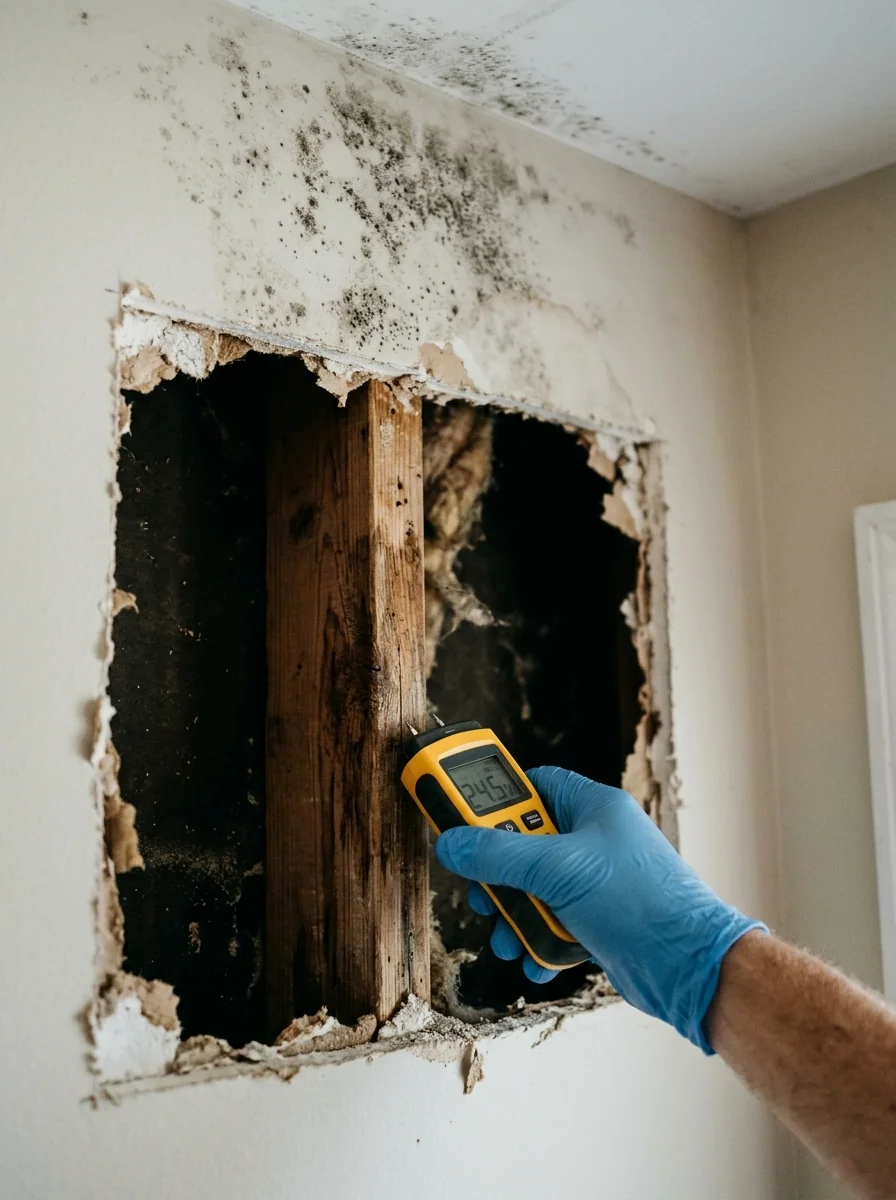
    Wet fibrous or open cell foam insulation is removed and discarded, even if it means cutting into wallboard (LSU AgCenter).

Need help with emergency flood damage cleanup?

Call (800) 764-5219 and describe the damage.

What to do first, and what not to do

What to do first

  • Before cleanup starts, contact your insurance company and photograph the home and belongings (LSU AgCenter).
  • Wear rubber gloves and goggles while handling flood-damaged items (LSU AgCenter).
  • Wait to re-enter your home until professionals say it is safe, with no structural, electrical or other hazards (EPA).
  • Never use a fuel-powered portable generator inside a home, garage, shed or similar enclosed area (EPA).
  • Keep a portable generator outside, at least 20 feet from buildings (EPA).
  • Do not mix cleaning products or add bleach to other chemicals (EPA).
  • Never use chlorine bleach in or near the air conditioning system (LSU AgCenter).
  • Do not sand or scrape painted surfaces in homes built before 1978, unless an inspection found no lead-based paint (LSU AgCenter).

What not to do

  • Never use a fuel-powered portable generator inside a home, garage, shed or similar enclosed area (EPA).
  • Keep a portable generator outside, at least 20 feet from buildings (EPA).
  • Do not mix cleaning products or add bleach to other chemicals (EPA).
  • Never use chlorine bleach in or near the air conditioning system (LSU AgCenter).
  • Do not sand or scrape painted surfaces in homes built before 1978, unless an inspection found no lead-based paint (LSU AgCenter).

Act fast

How Quickly to Act

  1. 24 hours Wet carpets, carpet pads and rugs come out within this time (LSU AgCenter).
  2. 2 to 3 days Mold begins to grow on materials that stay wet longer than this (LSU AgCenter).
  3. Weeks Drying can take weeks in a humid climate, and less time if the space is dehumidified (LSU AgCenter).

How to Choose an Emergency Flood Damage Cleanup Professional

  • Ask about protective equipment

    Workers should wear an N-95 respirator at a minimum, goggles and protective gloves (CDC NIOSH).

  • Ask how generators are run

    Portable generators stay outside, at least 20 feet away from buildings (EPA).

  • Ask when re-entry is safe

    Re-entry waits until professionals say there are no structural, electrical or other hazards (EPA).

  • Ask about photos for insurance

    Photographs of the home and belongings are taken before cleanup starts (LSU AgCenter).

Why Louisiana Homes Need Emergency Flood Damage Cleanup

Humid climate

Drying could take weeks in a humid climate, but much less time if the space can be dehumidified (LSU AgCenter).
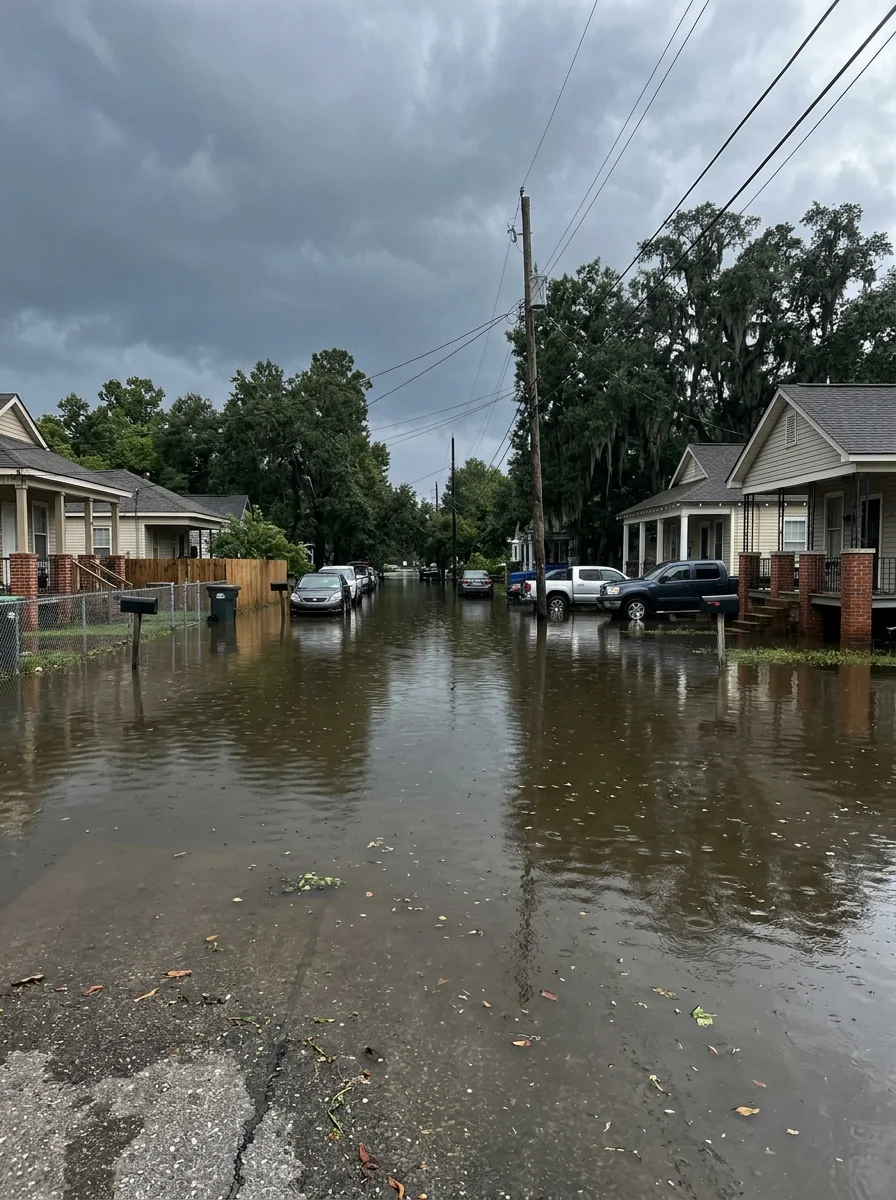
Generators after the storm

Fuel-powered portable generators produce deadly carbon monoxide gas, so they stay outside, at least 20 feet from buildings (EPA).

Humidity and mold

Mold begins to grow on materials that stay wet longer than two or three days, so cleanup starts right away (LSU AgCenter).

Where Emergency Flood Damage Cleanup Is Available

See all areas we cover

Related services

Water damage restoration

drying, extraction and repairs after a water loss.

Read more

Mold remediation

removing mold growth and fixing the water problem behind it.

Read more

Biohazard cleanup

cleanup of sewage-contaminated floodwater.

Read more

Emergency Flood Damage Cleanup questions

  1. What should I do first after floodwater recedes?

    Make sure the power is off and check for structural damage and infestations, then start cleaning and drying as soon as possible to prevent mold and rot (LSU AgCenter).

  2. Can I run a generator indoors?

    No. Never run a fuel-powered portable generator inside a home, garage, shed or similar enclosed area (EPA).

  3. How soon should wet carpet come out?

    Wet carpets, carpet pads and rugs should be removed within 24 hours (LSU AgCenter).

  4. How soon does mold start after a flood?

    Mold can grow on materials that stay wet for more than 24 hours (EPA). Mold begins to grow on materials that stay wet longer than two or three days (LSU AgCenter).

  5. What gloves and eye protection should I use?

    Wear rubber gloves and goggles while handling flood-damaged items (LSU AgCenter).

  6. Can I mix cleaning products?

    No. Do not mix cleaning products together or add bleach to other chemicals (EPA).

  7. Is it safe to go back into my home?

    Not until professionals tell you it is safe, with no structural, electrical or other hazards (EPA).

  8. Should wet insulation be removed?

    Yes. Remove and discard wet fibrous or open cell foam insulation, even if it means cutting into wallboard (LSU AgCenter).
Need emergency flood damage cleanup? Call now

  • Describe where the water came from and what has been wet.
  • You will be connected with a local team.